Remote-ready navigation
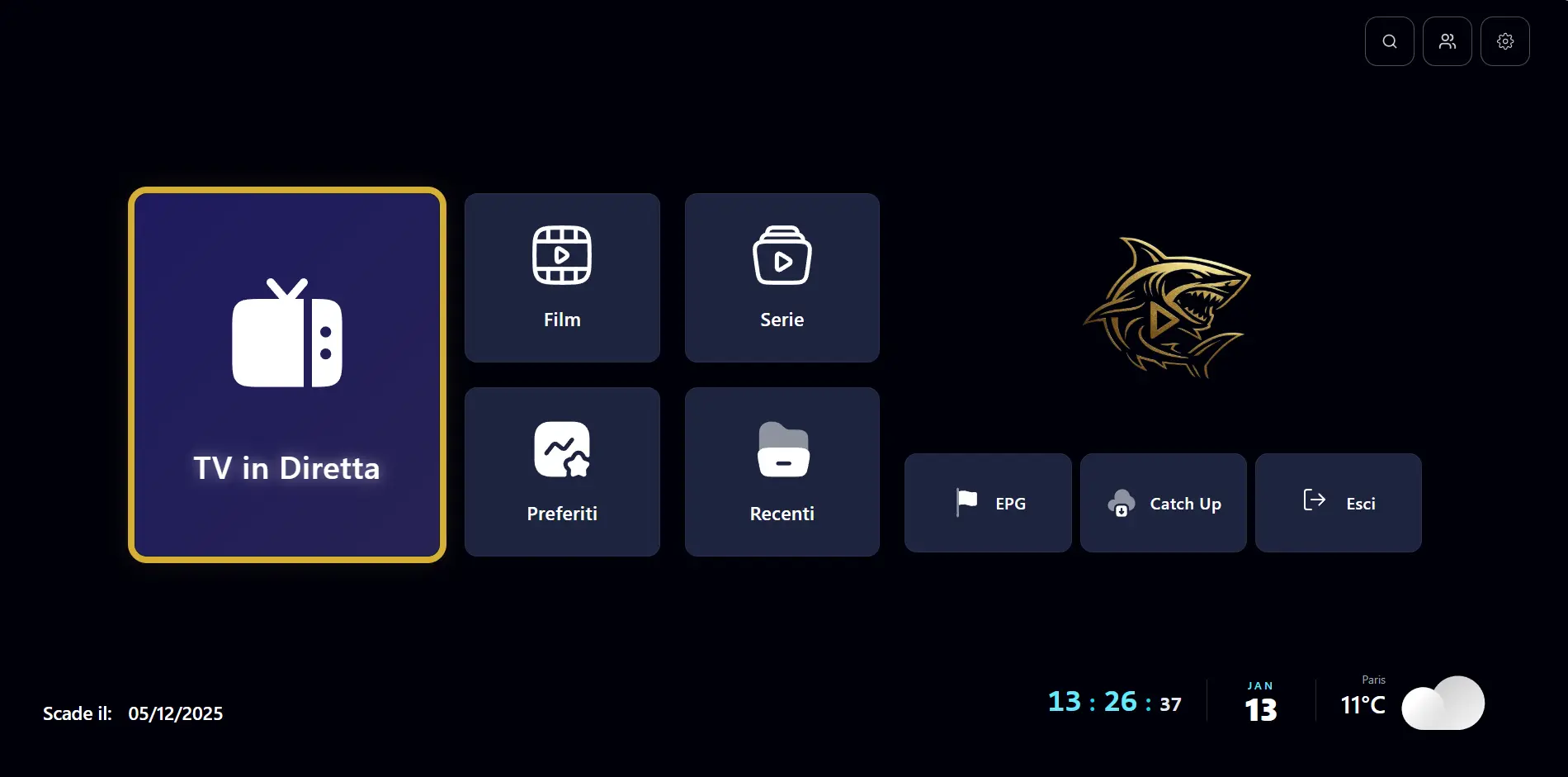
Define focus behavior for menus, catalogs, forms, overlays and playback controls so every main journey works with the remote.
Develop an LG webOS TV experience with remote navigation, playback and account flows shaped around your product and the television models you plan to support.
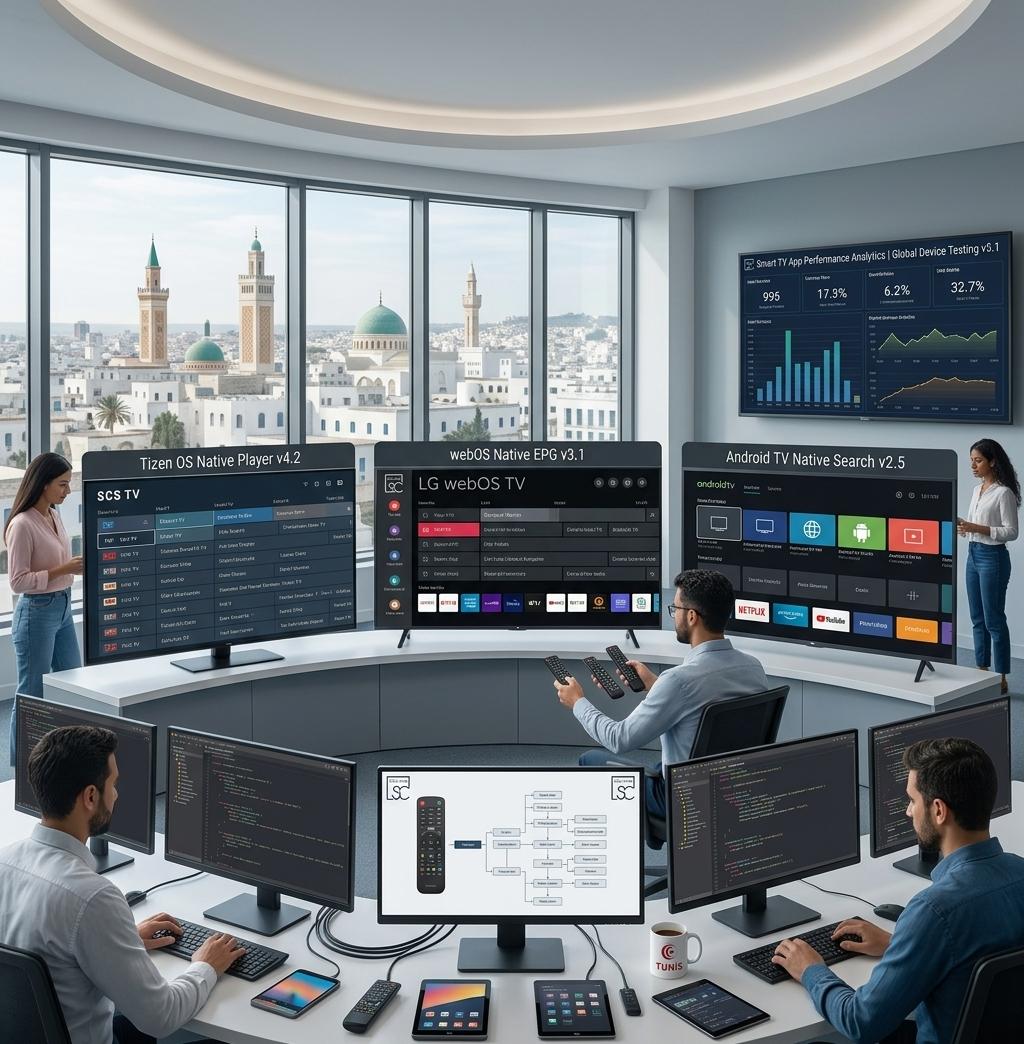
Connected TV ecosystem
TV applications and platform integration · Concept illustration
Delivery models
Launch rapidly with a proven white-label LG webOS streaming foundation or commission a bespoke application engineered around your brand design system, subscriber journeys, and monetization rules.
Our white-label LG webOS builds ship in 3 to 5 weeks with pre-tested live TV, EPG, VOD catch-up, Xtream Codes / M3U or custom REST/GraphQL catalog connectors, while custom builds deliver differentiated Smart TV interfaces tailored for broadcasters and Tier-1 OTT services.
Engineering stack
We architect LG webOS applications using React and LG's Enact framework (Moonstone/Sandstone) or lightweight custom React runtimes tuned for older Chromium baselines across webOS 4.x through webOS 24+.
Deterministic spatial navigation ensures both 5-way D-pad directional keys and LG Magic Remote pointer hover remain synchronized without lost focus states after data refreshes, modals, or player overlays.
Broadcaster track record
Broadcasters and IPTV/OTT operators work with our dedicated LG webOS engineers because we test against real physical LG televisions—not just desktop emulators—before packaging your `.ipk` release.
From initial stream validation and DRM license testing through LG Seller Lounge QA submission, you retain full ownership of source code, signing keys, and release pipelines.
Who this is for
Technical approach
The app is packaged for the webOS TV runtime and needs to account for the platform's input, lifecycle, media and distribution requirements. The supported model range should guide both implementation and verification.
Project capabilities
Define focus behavior for menus, catalogs, forms, overlays and playback controls so every main journey works with the remote.
Integrate the TV client with the catalog, authentication, access rules and playback interfaces already required by the service.
Identify webOS-specific lifecycle, device and media requirements early, with unsupported behavior and fallbacks documented.
Validate HLS and MPEG-DASH, live/VOD flows, EPG, subtitles and audio against target webOS versions. Scope DRM and entitlement behavior from actual content samples and license services.
Connect device activation, authentication, backend APIs and playback analytics while checking suspend/resume and memory behavior on physical LG televisions.
Use SDK tooling during development and verify the release candidate against representative physical LG TV models.
Project process
Agree on regions, webOS versions, device coverage, media requirements and distribution responsibilities.
Design focus order and recovery for the key viewing and account journeys.
Implement the TV application and integrate the product services needed for launch.
Check remote operation, playback, lifecycle and error handling, then prepare release materials.
Questions
We engineer and verify applications across LG webOS 4.x, 5.0, 6.0, webOS 22, 23, and 24+ televisions, calibrating Enact/React bundles and polyfills to the Chromium engines of your target model years.
We integrate HLS, MPEG-DASH, and CMAF streams via webOS-certified MSE/EME players (such as Shaka Player or Bitmovin) with PlayReady and Widevine DRM, tuned for LG hardware decoders and multi-audio tracks.
White-label LG webOS player customization—including brand UI theming, Xtream/M3U or custom OTT API integration, and EPG setup—takes 3 to 5 weeks. Bespoke webOS apps typically launch in 6 to 10 weeks.
Yes. We validate Magic Remote pointer and 5-way D-pad spatial navigation, app suspend/resume lifecycle, and `.ipk` packaging to pass LG Seller Lounge technical QA and regional Content Store approval.
Explore the connected platform work and implementation notes.
Technical references
Share your target devices, product requirements and existing systems to scope the next step.